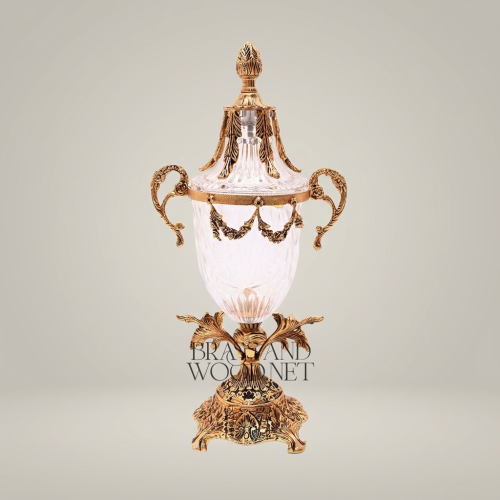
Napoleon III Cobalt Porcelain Ewer Vase with Dolphin Handle & Ormolu Mounts

Categories:
Design & Inspiration
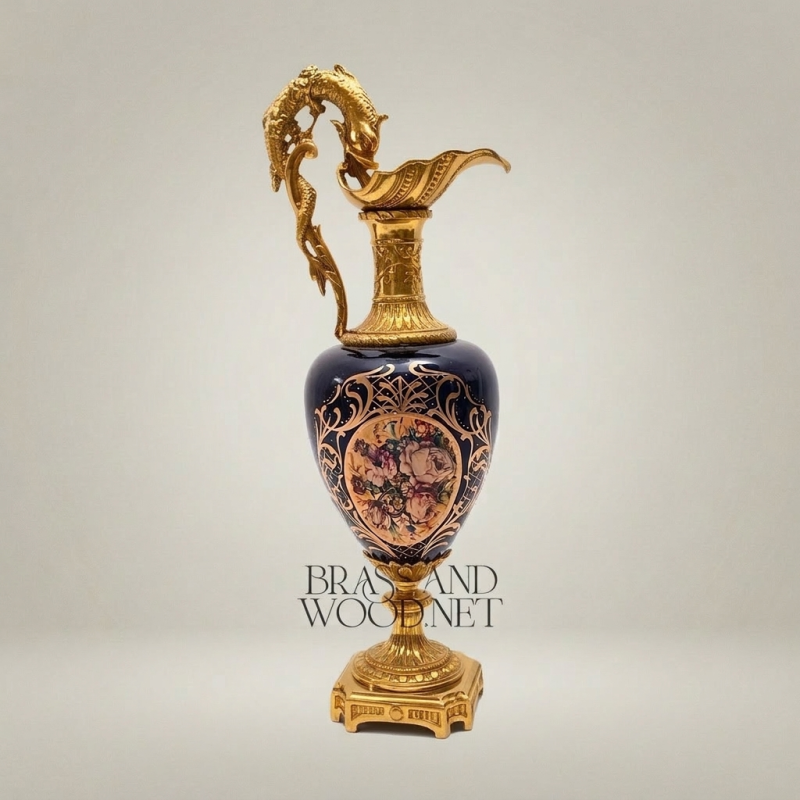
Few decorative objects command a room with the authority of a grand ewer vase — and this piece, faithfully inspired by the opulent aesthetic of Napoleon III's Second Empire (1852–1870), does so with extraordinary presence. The form draws from the great French porcelain tradition of Sèvres, where deep cobalt grounds served as the canvas for gilded arabesques, hand-painted scenic medallions, and the most theatrical of metal mounts. Set on a stepped gilt-bronze base and crowned by a magnificent dolphin handle — a motif beloved by both Renaissance and Empire-era craftsmen — this ewer vase is a collector's statement piece that transforms any shelf, console, or reception display into a curated tableau of European grandeur.
Materials & Craftsmanship
The body is formed from high-fired ceramic porcelain, glazed in a rich cobalt blue that deepens toward midnight in shadow and lightens to a luminous navy where light grazes its curved surface. Against this ground, gilded scrollwork, acanthus tendrils, and diamond-lattice trellis patterns are applied with meticulous precision. Each ewer features a hand-painted oval medallion panel — one depicting a romantic pastoral landscape with warm amber tones, the other a detailed floral bouquet composition — framed by gilded rocaille cartouches. The ormolu-style brass mounts are cast and hand-finished: the dramatic dolphin handle curls from the neck in a dynamic arc, its scales individually articulated, its mouth open at the spout in a classically theatrical gesture. The spout itself fans into a broad, reeded shell form, and the entire neck collar is ringed with egg-and-dart and bead molding in polished gilt brass. The pedestal base, equally detailed, features foliate relief panels and a chamfered plinth — anchoring the piece with appropriate visual weight.
Dimensions & Details
This ewer vase is a single-piece decorative object, weighing approximately 4 kg — a testament to the substantial ceramic and brass construction within. Its proportions are carefully balanced: the swelling ovoid body, elongated neck, and towering dolphin handle create a silhouette of dynamic verticality suited to console tables, étagères, library shelves, and reception mantels. The piece is supplied fully assembled and requires no further preparation before display.
Handcrafted in Egypt
At Brass & Wood, every piece in our decorative accessories collection is produced in Egypt by artisans who inherit a long tradition of working with ceramic, brass, and gilded finishes. This ewer vase is handcrafted — from the throwing and glazing of the porcelain body, to the hand-painting of each scenic panel, to the casting and hand-chasing of the brass dolphin handle and ormolu mounts. No two pieces are precisely identical, and the minor variations in brushwork and gilding that result are the hallmarks of genuine handcraft, not flaws. Available in multiple brass finish variants to complement your interior palette.
Frequently Asked Questions
What materials is this ewer vase made from?
The body is high-fired ceramic porcelain with a cobalt blue glaze and hand-applied gilded decoration. The handle, spout, neck collar, and base mounts are cast brass, hand-finished in your choice of brass color variant. The total weight is approximately 4 kg.
Is this piece fragile? How should I care for it?
Yes — as with all fine porcelain decorative objects, this ewer vase should be handled with care. Dust regularly with a soft dry cloth. For the porcelain body, a lightly damp cloth may be used. Avoid abrasive cleaners on the gilded surfaces, and keep the piece away from direct sunlight to preserve the cobalt glaze and painted medallion panels. For deep cleaning, professional handling is recommended.
Can this piece be customized?
Yes. Brass & Wood offers customization on brass finish color (Gold, Silver, Antique Gold). For larger orders or bespoke commissions, please contact our team directly to discuss options including custom painted medallion subjects or alternative glaze colorways.